VIN Scanner
- 3.6
- Rating
- 100.00K
- Installs
- Free
- Price

 Analysis by App-foxy
I found VIN Scanner most useful when I treated it as a focused working tool rather than a general car-shopping companion. It belongs to the Auto & Vehicles category, is free to use, and is built around vehicle identification for appraisal work, run lists, market context, and profit decisions. That combination gives it a more practical feel than a basic VIN lookup page, especially for someone who regularly handles several vehicles instead of checking one car out of curiosity.
The first impression is fairly direct: the app is about getting vehicle information into a workflow quickly. The developer is listed as VIN Scanner, and the app has reached over 100 thousand installs, with an average rating of 3.9 from more than 500 ratings. Those numbers suggest a useful but not universally loved tool. In my experience, that is a fair way to approach it. It can save time for the right user, but it is not the kind of app I would recommend blindly to every driver.
How VIN Scanner fits into real appraisal work
The strongest reason to install it is the way it connects a VIN check with decisions that happen after identification. A casual scanner usually answers a narrow question: what vehicle is this? VIN Scanner aims closer to a dealer or auction workflow, where the important question is what the vehicle may be worth, how it fits into a run list, and whether the numbers leave room for profit.
You May Also Like

 Google Keep - Notes and lists
Google Keep’s Quiet Growth Shows the Appeal of Simpler Notes
As mobile work gets busier, Google Keep keeps winning a simple contest: capture a thought quickly, find it later, and get on with the day.

 Blood Strike: 2.5 Anniversary
Blood Strike’s Loadouts Turn Every Drop Into a Tactical Gamble
A close look at Blood Strike’s custom loadouts: how fast access to signature weapons reshapes its battle royale rhythm, rewards preparation, and narrows the gap between fights.

 Pandora - Music & Podcasts
Pandora’s Music Is Easy to Start, but Harder to Recover
Pandora’s strength is its low-effort path from a seed to a station. Its weak spot is how much confidence it asks you to place in connection, setup, and quiet recovery.

 8 Ball Pool
 Is Built on Rivalries, Rematches, and Routine
A close look at the rivalries, rematches, shared routines, and unanswered safety questions that turn a quick pool match into a persistent mobile community.

 Samsung Music
’s Quiet Strength Is Playing What You Already Own
Its reach comes less from spectacle than from dependable access to a personal library. That simplicity is both the app’s strongest retention engine and its ceiling.

 AccuWeather: Weather Radar
AccuWeather Review: A Quick, Clear Forecast for Everyday Decisions
For everyday plans, the best forecast is the one you can understand quickly. AccuWeather makes rain timing, radar, and local conditions easy to act on, with a few trade-offs.
More From Our News Desk



That distinction matters. If I am standing beside a used vehicle, I do not only want to copy a long identification number into a browser. I want the result to become part of a repeatable process. The app’s focus on appraisals and market insights makes more sense when several cars need to be reviewed in sequence. It encourages me to think about each vehicle as a possible purchase, trade, or resale decision rather than as an isolated lookup.
A realistic example would be a small independent dealer reviewing vehicles before an auction. I could inspect the VIN on the first car, record the identity, compare it with the available market picture, and decide whether it deserves further attention. On the next car, I could repeat the same process without switching between a camera tool, a notes app, a search engine, and a separate spreadsheet at every step. That reduction in app-hopping is where the practical value lies.
It is also useful for someone who buys and sells cars occasionally but wants more discipline than a guess based on appearance. A clean exterior can hide an awkward trim level, an unappealing configuration, or a price that leaves little room after preparation costs. VIN Scanner cannot replace a physical inspection, but it can help me slow down before making a financial decision.
Readability and navigation in a busy setting
For this kind of tool, readable presentation is not a cosmetic detail. Appraisal work often happens outdoors, beside a vehicle, in a dealership lot, or during a fast-moving auction visit. I need to understand what the app is showing without studying every screen for a long time. VIN Scanner’s purpose is clearest when the path from vehicle identification to appraisal thinking remains short and task-oriented.
I would approach the interface with a simple habit: complete one vehicle at a time and verify the result before moving to the next. That sounds obvious, but it prevents a common mistake in fast workflows—mixing one car’s VIN with another car’s notes or market judgment. A short pause to check the vehicle identity, body style, and other visible details can protect against an expensive data mix-up.
The app is likely easier for users who are comfortable with compact utility interfaces and automotive terminology. It is less suitable for someone who expects a guided tutorial at every stage. If you already understand why a VIN matters and what an appraisal workflow involves, the focused design should feel efficient. If you are new to vehicle buying, the app may present information without explaining every implication in plain language.
That is an important accessibility point. Clear navigation is not only about large text or obvious buttons; it is also about reducing mental translation. A first-time buyer may see a vehicle record and still wonder which details affect resale value, which affect reliability, and which merely describe the configuration. An experienced appraiser can make those connections quickly, while a beginner may need outside knowledge.
My best practical tip is to use the app as a decision checkpoint, not as a screen to stare at while walking around a car. Stop in a safe place, enter or scan the identification carefully, and review the result with enough time to compare it against the actual vehicle. This makes the workflow more readable and reduces the pressure that can make small interface differences feel bigger than they are.
Motor and sensory considerations when collecting vehicle information
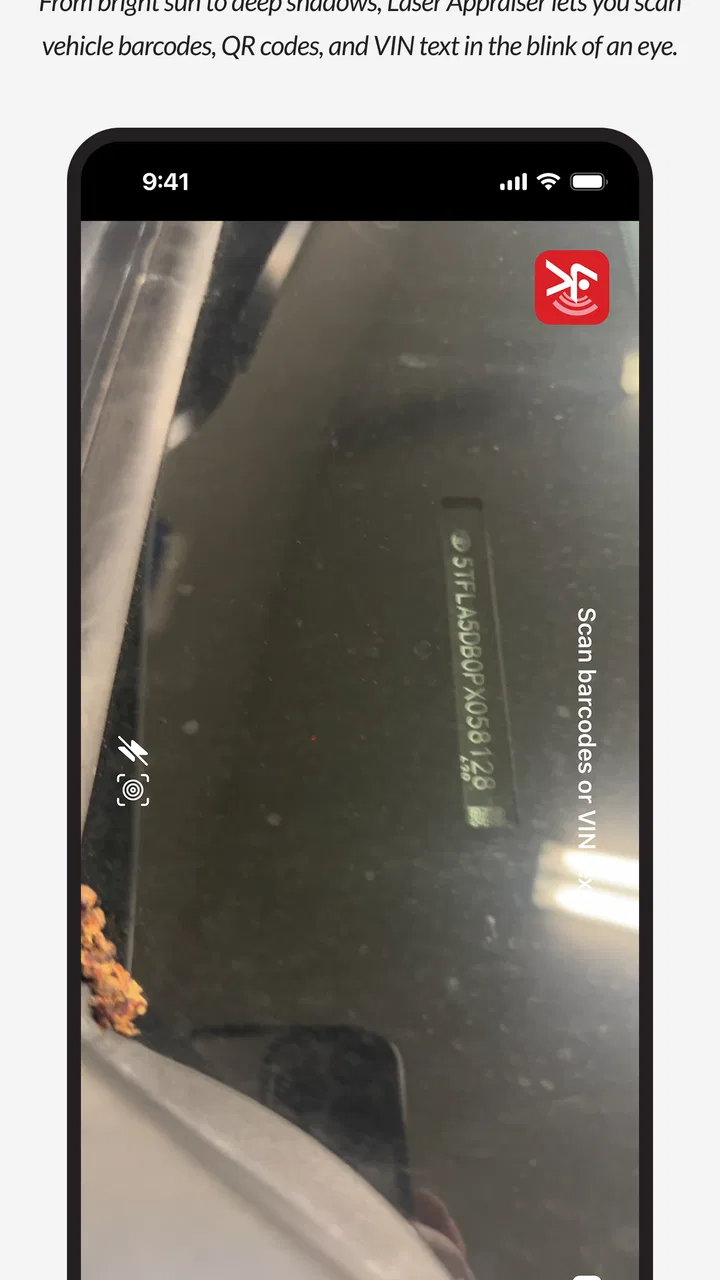
VIN entry is one of the areas where physical access can affect the experience. Vehicle identification numbers are long, visually dense, and easy to mistype. Anyone with limited hand movement, tremors, reduced fine-motor control, or difficulty holding a phone steady may find manual entry tiring. A scanning-oriented workflow can be more comfortable than repeatedly typing characters, but the camera still needs to be positioned well enough to read the label.
That creates a trade-off rather than a universal advantage. Scanning may reduce keyboard effort, yet it can be awkward when the VIN plate is in a cramped location, poorly lit, reflective, dirty, or partly blocked. A user with low vision may also struggle to confirm whether the camera captured a similar-looking character correctly. I would never assume that a successful scan means the result is automatically safe to use for a purchase decision.
For users with hearing differences, the important parts of this app’s value are primarily visual and task-based. That can be helpful when a workflow does not depend on spoken instructions. At the same time, anyone who relies on audio feedback in mobile apps should test the process personally before using it during a time-sensitive appraisal. I would not build an auction-day routine around an untested assumption about how alerts or confirmations are presented.
People with light sensitivity may also prefer to review the app away from harsh outdoor glare or rapidly changing camera views. A shaded position, a clean lens, and a steady hold can make the scanning process easier for many users, not only those with a disability. These small environmental changes often matter more than trying to rush through a difficult capture.
There is another useful workaround for motor limitations: prepare the surrounding workflow before opening the app. Keep the phone accessible, position the vehicle so the identification area can be reached without stretching, and avoid balancing paperwork, keys, and the phone at the same time. VIN Scanner is most comfortable when the physical inspection and the digital record are treated as two connected steps rather than one hurried action.
Situational access for dealers, buyers, and mobile workers
The app’s audience extends beyond full-time dealerships. A private buyer comparing several used cars can use it to bring more structure to research. A salesperson may use it while preparing a vehicle for a listing. A wholesaler or small lot operator may find the emphasis on run lists more relevant than a consumer-focused vehicle history product. In each case, the benefit depends on whether the user needs a repeatable appraisal process.
It is particularly well suited to people who work away from a desk. A browser-based alternative may be perfectly adequate when I have a stable connection, a large screen, and plenty of time. In a parking lot, however, a dedicated mobile tool can make the sequence feel more natural. I can move from the vehicle to the phone and back again without recreating the entire search each time.
That convenience should not be confused with complete independence from other tools. A serious buying decision still benefits from photographs, service records, inspection notes, ownership documents, and a calculation of taxes, transport, repairs, and preparation. VIN Scanner can support the identification and market-thinking part of that process, but it should not become the sole evidence behind a bid or purchase.
For someone with cognitive fatigue or attention difficulties, a repeatable routine can make the app easier to use. I would keep the same order for every vehicle: identify it, check that the result matches the physical car, review the market position, note the likely costs, and then decide whether to continue. The app is more useful when it anchors that sequence instead of becoming another source of scattered information.
Users who frequently change locations should also think about the conditions in which they will work. A quiet office and a noisy auction yard are very different environments. Glare, movement, interruptions, and time pressure can make any mobile workflow harder. My advice is to test VIN Scanner in the exact setting where it will matter. A calm home trial tells me whether I understand the app; it does not necessarily tell me whether I can use it comfortably beside a crowded vehicle line.
Where it falls short and when another option is better
The main limitation is scope. VIN Scanner is aimed at professional-style vehicle appraisal tasks, so a person who only wants a one-time history report may find a dedicated history service more appropriate. Those services often make their purpose clearer to ordinary buyers, while this app’s value depends more on understanding the buying and resale workflow around the VIN.
I would also avoid treating market insight as a guarantee of profit. A promising number can disappear after transport, mechanical work, detailing, registration, auction fees, or a slower-than-expected sale. The app may help me frame the opportunity, but the final calculation belongs in a broader worksheet. This is one of the most important trade-offs: speed is useful, but speed can encourage false confidence if I skip the costs that are not visible in a quick appraisal.
Another barrier is the need to verify every result against the vehicle in front of me. A scan can be wrong because of glare, damage, an unreadable character, or a simple mismatch between the selected car and the record being reviewed. This is especially important for users with visual or motor challenges, because confirming a long identifier may take more time. The right response is not to abandon the app, but to build verification into the routine and ask for help when the physical label cannot be checked reliably.
People who need extensive customization, very large controls, strong spoken guidance, or highly simplified explanations should evaluate the app carefully before depending on it. The age rating is Everyone, and the minimum operating-system requirement is Android 7.0, which makes it approachable from a compatibility standpoint, but compatibility does not automatically equal comfort for every ability or context.
The current version is 3.2.2, and the app has been available since May 19, 2010. Its long presence suggests an established purpose, but I would still judge it by the workflow I need today. A mature app can be reassuring, yet a user should not assume that an older supported device or a familiar automotive process will remove all practical friction.
Who should use it, and who should skip it?
I would recommend VIN Scanner to independent dealers, vehicle buyers who inspect multiple cars, auction participants, and anyone who needs to connect VIN identification with appraisal and resale thinking. It is also a reasonable choice for a small operation that wants a mobile starting point before investing in a more elaborate inventory system.
I would be more cautious about recommending it to a first-time buyer who wants a simple explanation of whether one particular car is safe, reliable, or fairly priced. That person may need a vehicle history report, an independent mechanic, and a plain-language buying guide more than an appraisal-oriented tool. Likewise, someone who never handles more than one vehicle at a time may not gain enough from the app’s workflow focus to justify learning it.
For accessibility, the best match is a user who can comfortably position a phone near the VIN, read the resulting vehicle details, and verify the record with the physical car. Users with limited reach, low vision, or difficulty holding a device can still benefit, especially if they use assistance or a prepared setup, but I would not call the experience effortless in every situation. The app supports a practical task; it does not remove the physical demands of inspecting a vehicle.
The most reliable way to use it is as one part of a careful appraisal routine, never as the entire decision. That approach also makes the app more inclusive, because it leaves room for a second person to confirm the VIN, record notes, or inspect areas that are difficult to reach.
My inclusive verdict after using it as a working tool
VIN Scanner has a clear identity. It is a free Auto & Vehicles app from VIN Scanner that focuses on turning vehicle identification into appraisal, run-list, market, and profit-related work. I like that practical direction because it addresses a real gap between a simple VIN lookup and the messy decisions involved in buying and reselling cars.
Its strengths are most visible when I have several vehicles to review, limited time, and a need for a consistent process. Its weaknesses appear when the environment is noisy or bright, the VIN is hard to reach, the user needs extensive guidance, or the decision requires evidence beyond market context. Those are not minor exceptions; they determine whether the app feels like a shortcut or another task to manage.
The 3.9 average rating reflects that middle ground well: useful for a defined audience, but not automatically ideal for everyone. I would install it before an appraisal day, test the scanning and review steps in a calm setting, and prepare a backup method for recording the VIN and costs. If the workflow fits, it can make vehicle evaluation more organized. If I only need a one-off consumer report or highly guided accessibility support, I would choose a more specialized alternative.
Overall, I see VIN Scanner as a focused assistant for people who already have some automotive judgment and want to make their mobile appraisal process faster. It rewards careful verification and a repeatable routine. Used that way, it is a sensible free tool; used as a substitute for inspection, records, or financial calculation, it is not enough on its own.
FAQs for VIN Scanner
01What is VIN Scanner and how does it work?
VIN Scanner is a mobile application designed to quickly and accurately scan vehicle identification numbers (VINs) using your smartphone's camera. Once scanned, the app decodes the VIN to provide detailed information about the vehicle, such as the manufacturer, model, year, and more. This can be particularly useful for car buyers, sellers, and enthusiasts.
02Is VIN Scanner compatible with all vehicles?
VIN Scanner is compatible with most vehicles manufactured after 1981, as this was the year when standardized 17-digit VINs were implemented. The app may not work with older vehicles or those with non-standard VIN formats. Always check the app’s compatibility list to ensure it supports the vehicle you intend to scan.
03Does VIN Scanner require internet access to function?
VIN Scanner primarily requires internet access to decode VIN information and provide detailed vehicle data. While basic scanning might work offline, full access to the database and additional features like vehicle history reports or recall information will need an internet connection to ensure the data is up-to-date and accurate.
04Is my data secure when using VIN Scanner?
VIN Scanner prioritizes user privacy and data security. The app typically encrypts data transmissions and follows industry-standard practices to protect user information. However, users should review the app’s privacy policy and permissions before downloading to understand how their data is used and stored.
05Are there any costs associated with using VIN Scanner?
VIN Scanner is generally free to download, but it may offer in-app purchases or subscription services for premium features, such as detailed vehicle history reports or ad-free usage. Users should review the pricing details in the app store to understand any potential costs before downloading.
Pros
- Fast scanning of VIN codes.
- User-friendly interface design.
- Supports multiple vehicle types.
- Accurate decoding of information.
- Offline scanning capability.
Cons
- Limited free features.
- Occasional scanning errors.
- Requires camera permission.
- No manual input option.
- Ads in free version.

VIN Scanner
Gallery